A Climate Survey at the Atlantis Special Economic Zone Company
Thirty-four people. Ten days. One hundred percent participation — and a CEO who told his staff what the leadership had heard, and how it would respond, within weeks.
Organisational climate surveys can die one of two deaths. The first is at launch: a third of the staff never answer, and everyone quietly agrees the results “aren’t representative”. The second comes after the report: the findings are acknowledged, filed, and never mentioned again. When Thornhill ran a climate survey for the Atlantis Special Economic Zone Company in March 2026, we got a much livelier response.
A Small Company with a National Mandate
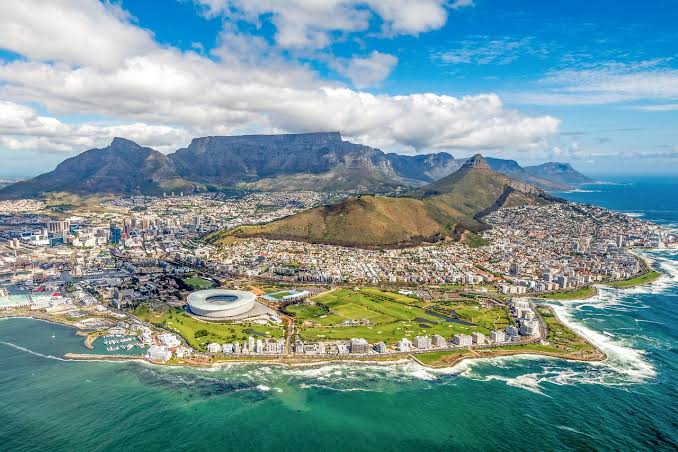
Atlantis, north of Cape Town, is home to South Africa’s greentech special economic zone — designated by Cabinet in June 2018 to grow a manufacturing hub for renewable energy and green technology. The Atlantis Special Economic Zone Company (ASEZCo), a state-owned company, develops and runs the zone. By 2026 it had attracted more than R3 billion in investment and created over 800 jobs, against a target of roughly 3 000 direct jobs by 2030.
The company behind that mandate is small: 34 people across four departments. It is essential to understand the climate in a small mission driven organisation. Teams like this are stretched by design — everyone carries a piece of that mission, and there is nowhere for a morale problem to hide.
Why a Climate Survey, and Why Now?
The company put it like this.
“At the ASEZ, we believe that a high-performing organisation is built on listening to its people. As our organisation continued to evolve and deliver on an ambitious strategic mandate, we wanted to better understand the team’s experience of the workplace, celebrate what was working well and identify opportunities to strengthen our culture. Conducting an independent climate survey reflected our commitment to openness, continuous improvement and ensuring that every member of our team had a safe and confidential opportunity to be heard.”
ASEZCo issued a formal request for quotations in February 2026 for the design, administration and management of an organisational climate survey — and the brief asked for more than a questionnaire. It specified an introductory session with staff, and results presented to the executive, to HR, and to the staff themselves. The feedback loop was decided before the first question was asked.
The Approach
We used Thornhill’s standard online Climate Survey for ASEZCo. The report groups responses under the headings “wellbeing”, “communication and transparency”, “integrity”, and “performance”. Trust is the key to honest and even enthusiastic participation. Staff need to believe that their responses really are confidential. ASEZCo did a number of things to achieve this:
• First the company appointed an outside independent service provider (Thornhill Associates).
• Second it ensured that staff were fully briefed. Before the launch, staff were informed about the survey, the reasons for running it, introduced to Thornhill, and assured that they would be fully informed about the survey findings.
• Third Thornhill was asked to describe the process to the staff, and show how anonymity is baked into the way the survey is conducted: literally no-one sees individual responses which are reported in aggregate only, and no group results are reported if the group is smaller than three members.
Email wording was agreed with ASEZCo before anything went out. A designated HR co-ordinator could monitor response numbers through a secure login, under a signed confidentiality undertaking, so reminders could be personal while answers stayed invisible.
Ten Days to One Hundred Percent
The survey opened on 6 March 2026 and closed on 16 March. By the morning of the deadline, 32 of the 34 had responded; by close, all 34. One hundred percent participation, in ten days, on the strength of two automated reminders and some energetic encouragement inside the company — HR reported “quite a buzz” around the survey.
Full participation is not a vanity number. It removes the easiest way to dismiss unwelcome findings — “the unhappy people didn’t respond” — and it signals, before a single result is read, that staff believed answering was worth their time.
The Leadership Response
Nine days after the survey closed, ASEZCo’s executive team sat down with Thornhill for 90 minutes. The session was built as a working discussion — structured to end in priority actions, with time deliberately set aside for the hardest topic on the table. The survey had surfaced difficult issues alongside genuine strengths, and the executive engaged with both openly. Thornhill followed up with a briefing note to support the CEO’s internal conversation.
Then came the part most organisations skip. On 21 April, the results went back to the people who provided them: Thornhill presented the findings to all staff, and the CEO followed — in person — with the organisation’s response.
It took less than seven weeks from the time the questionnaire landed in staff inboxes to the CEO responding to the major issues raised in front of the whole company.
Voices
“From the start Thornhill offered a clearly structured process, provided guidance and clarity on each step, gave detailed feedback on the meaning of the results and then guided how best to engage with the team. They are a great partner and met us fully with our desire to ensure an impactful process. For me, the success of the survey was never going to be measured by the response rate alone. It was about creating an environment where every employee felt safe to share their experiences honestly, knowing they would be heard. Achieving full participation showed that our people trusted the process, and just as importantly, we were committed to responding with transparency and action. The work of building a healthy culture is never finished, and leadership sees it as an ongoing responsibility rather than a completed project.” – Siyasanga Tetyana, Human Resources Specialist, ASEZCo
“As an organisation we have demanding shareholders and have set ourselves ambitious targets. We recognise that nothing can be achieved unless we work together and that means ensuring everyone understands their role and are similarly supported to achieve their best. Those high demands also mean we need to recognise and be aware of where systems are failing or staff are not being recognised and supported. Thornhill’s survey showed both the positives and the pain points. It was hugely useful and valuable to reflect on these with their guidance and consider how to engage and respond. As an executive team, we also had to be honest about the things we were not able to change (outside of our control) and to consider how best we could mitigate these through other initiatives. I have to say that as CEO I fully supported this process, but credit must go to the SEZ Executive leadership and Corporate Services team (with HR dynamo Siyasanga Tetyana) for running this process and bringing it to its full conclusion.” – Matthew Cullinan, CEO, ASEZCo
Since the Survey
“The survey did not produce a list of quick fixes, nor did we expect it to. Instead, it strengthened an ongoing commitment to listen, reflect and improve. For example, we wanted to find ways to support staff professionally and with some of the day-to-day costs. We have strengthened and expanded opportunities for professional growth and development through funded access to training. We have explored ways to improve flexibility of working locations where possible. We have introduced a graded transport allowance – that supports most those who need it. We also encourage and support professional exposure through conferences and industry engagement. Some changes have been small, others more significant, but together they reflect commitments to make ASEZCo a place where people can do meaningful work, in a supportive environment and continue to grow professionally.” – Matthew Cullinan, CEO, ASEZCo
A climate survey is a photograph, and photographs age with time. The measure that matters is movement — which is why the strongest version of this story gets written the next time ASEZCo asks its people the same questions, and compares the two reports.